

Substrates and Support Films for Grids
They are essential for holding and preparing samples in TEM, allowing electrons to pass through and obtain high-resolution images.
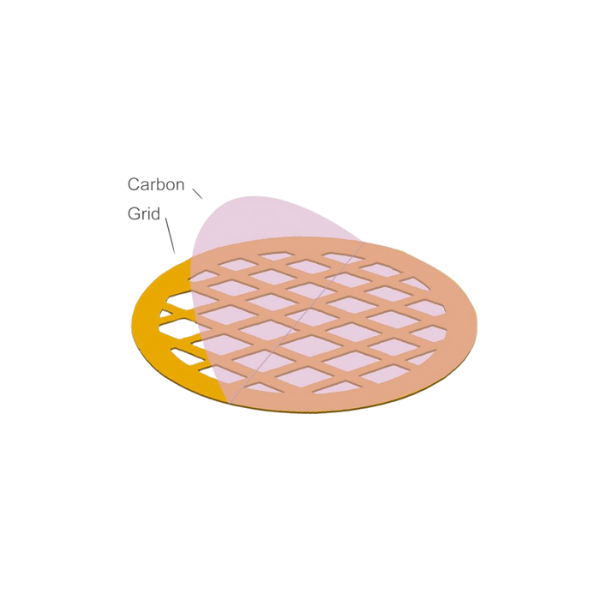
Ted Pella substrates and support films for TEM grids are specialized products used in transmission electron microscopy (TEM) sample preparation.
General Description
Substrates serve as surfaces for placing or depositing samples, typically extremely thin to allow electron transmission in TEM.
Support films are ultrathin layers that physically support samples on TEM grids while minimizing interference with microscope signals.
Common Materials
Carbon Films are the most widely used due to their stability and low interference with TEM images.
Formvar Films, a polymer support often reinforced with carbon, enhance durability.
SiN Films (silicon nitride) offer high thermal and mechanical stability and electron transparency.
Holey and Lacey Films feature holes or patterns to hold delicate sample parts, improving contrast and fine area visualization.
Features
- Electron Transparency: Must be sufficiently thin and uniform to avoid interfering with the electron beam, providing sharp, high-resolution images.
- Sample Preparation: Compatibility Compatible with various sample deposition methods, such as particle dispersion, thin film deposition, and solution application.
- Mechanical Stability: Essential for maintaining sample integrity during TEM observation.
Applications
- Materials and Nanotechnology: Used to study crystal structure, defects, and composition of materials like nanoparticles, nanowires, and other nanomaterials.
- Materials Science Research: Employed for analyzing metals, ceramics, and polymers, where internal structure is crucial. Biological Sample Preparation
- Biological Sample Preparation: In biology, support films enable observation of tissues, cells, viruses, and other biological structures at the nanometric level.